
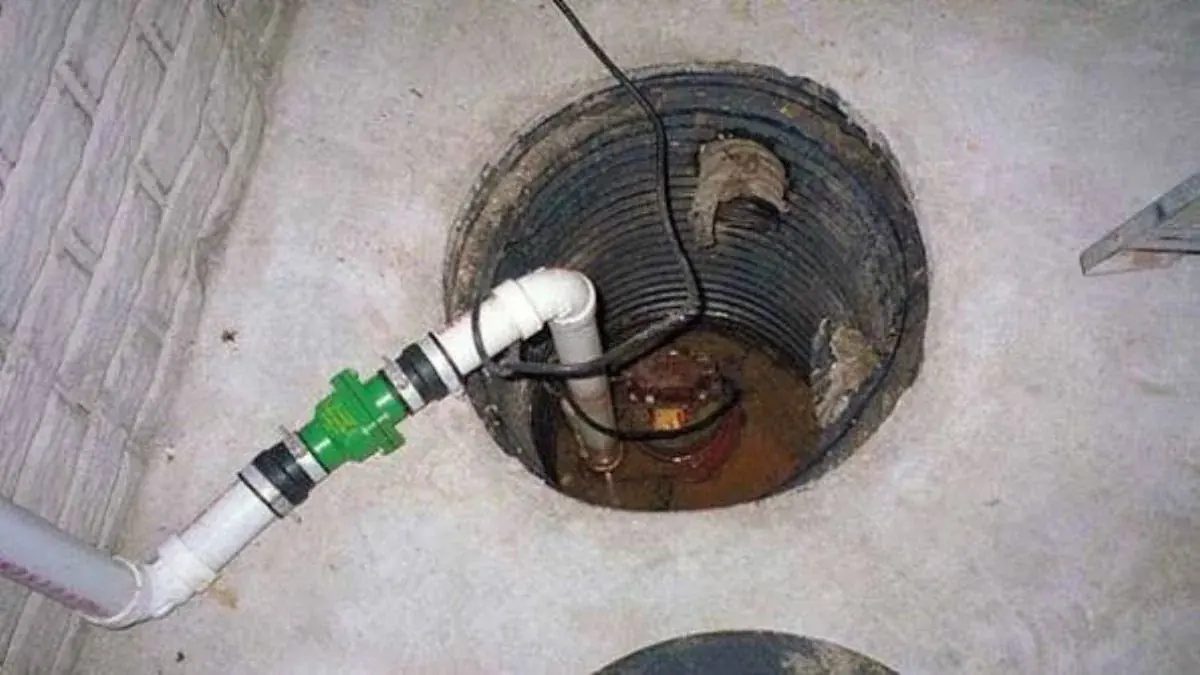
A backup sump pump is the second pump or power source that takes over when your main pump fails or the power goes out. Storms that bring heavy rain often bring outages, which means the moment you need the pump most is when it is most likely to stop.
This guide compares the main backup options and explains how to choose one for a Hamden basement. For repairs and new pumps, see our sump pump page.
Pit rising and the pump is not working
A pit that is filling with a dead pump is an emergency. We answer 24/7 and dispatch on storm nights, and we try for the earliest same-day visit.
Do this first.
- Check that the pump is plugged in and that the outlet and breaker have power.
- Check the float for a stuck arm and lift it gently to see if the pump starts.
- Do not wade into water near outlets or appliances. Call the electric utility if the panel is flooded.
- Move belongings off the floor and call us.
The three backup options
A battery backup pump runs on a deep-cycle battery when the power fails, and it runs a second, smaller pump in the same pit. A water-powered backup uses pressure from the household water supply to push pit water out, and it needs no battery or electricity. A generator-fed circuit powers the main pump during an outage.
Each has trade-offs. The right choice depends on your pit size, how often the pump runs and how long outages last in your area.
Backup options compared
Match the option to your situation.
| Option | Strength | Limit |
|---|---|---|
| Battery backup | Works in a power outage, no water use | Battery needs checking and replacing, limited run time |
| Water-powered | No battery, no electricity | Uses household water, needs adequate supply pressure, not for wells |
| Generator circuit | Powers the main pump for long outages | Needs the generator running and a safe connection |
| Second electric pump | Covers a main pump failure | Does not help in an outage |
Sizing and the discharge
Backup pumps are usually smaller than the main pump, so they hold a pit steady during a smaller flow. If your pit receives large volumes, a high-capacity backup or a second full-size pump may be better. The discharge pipe must be large enough, and a check valve keeps pumped water from flowing back into the pit.
Where the water goes matters too. It should discharge well away from the house, not toward a neighbor's property. Many places do not allow sump discharge into the sanitary sewer, so check local rules before connecting.
Testing and maintenance
Test both pumps twice a year. Pour a bucket of water into the pit and watch each pump start, discharge and stop. For a battery system, check the battery's charge, the terminals and the age, and replace it on the maker's schedule. Clear the intake of debris, and make sure the outdoor discharge is clear of leaves and ice.
A backup that has never been tested is a guess. We can test both pumps at the same visit as an installation.
Why wet basements need more than a pump
A pump moves water out of the pit, but it does not stop water from reaching the pit. If groundwater is high, gutters empty at the wall or the soil slopes toward the foundation, the pump works hard and wears out sooner. Fix the outdoor drainage first, then add the backup.
If water keeps returning, our basement waterproofing page explains drainage options.
Choosing between a battery and a water-powered backup
If your outages are short and your pit rarely fills fast, a battery backup is a sound, low-maintenance choice. If you lose power for days in a bad storm, plan for a larger battery bank or a generator circuit. Water-powered units suit homes on municipal water with good pressure, but they use a lot of household water while they run, which matters on a long storm night.
Ask the installer to explain how long the backup will keep up at your expected inflow. A good answer is a number of hours, not a promise. Ask also whether the system sounds an alarm when the main pump fails or the battery is low, because a silent backup is easy to forget until the night it is needed.
Groundwater, rivers and storms in this area
North Haven's soils along the Quinnipiac River valley are sandy, and groundwater can sit close to basement floors. Woodbridge's hills put water against foundations built into slopes. In Hamden, areas near the Mill River and Lake Whitney can see rising groundwater after prolonged rain.
These are general patterns, not a rule for any one house. Permit rules vary, so ask the town about discharge and electrical work before you start. We serve North Haven and Woodbridge as well as Hamden. The discharge pipe and check valve fall under Connecticut's 2022 State Building Code, which is based on the 2021 International Plumbing Code (IPC).
Call us and describe your pit.
Local questions answered
If your basement floods when the power fails or the main pump quits, yes. A backup closes that gap.
It depends on the battery size and how often the pump runs. A heavy storm can drain a small battery in hours.
Usually not, because it relies on strong municipal water pressure. Ask us about your system.
Yes. We replace and test backup batteries.
Coverage varies, and some policies require an endorsement for water backup. Ask your insurer.