
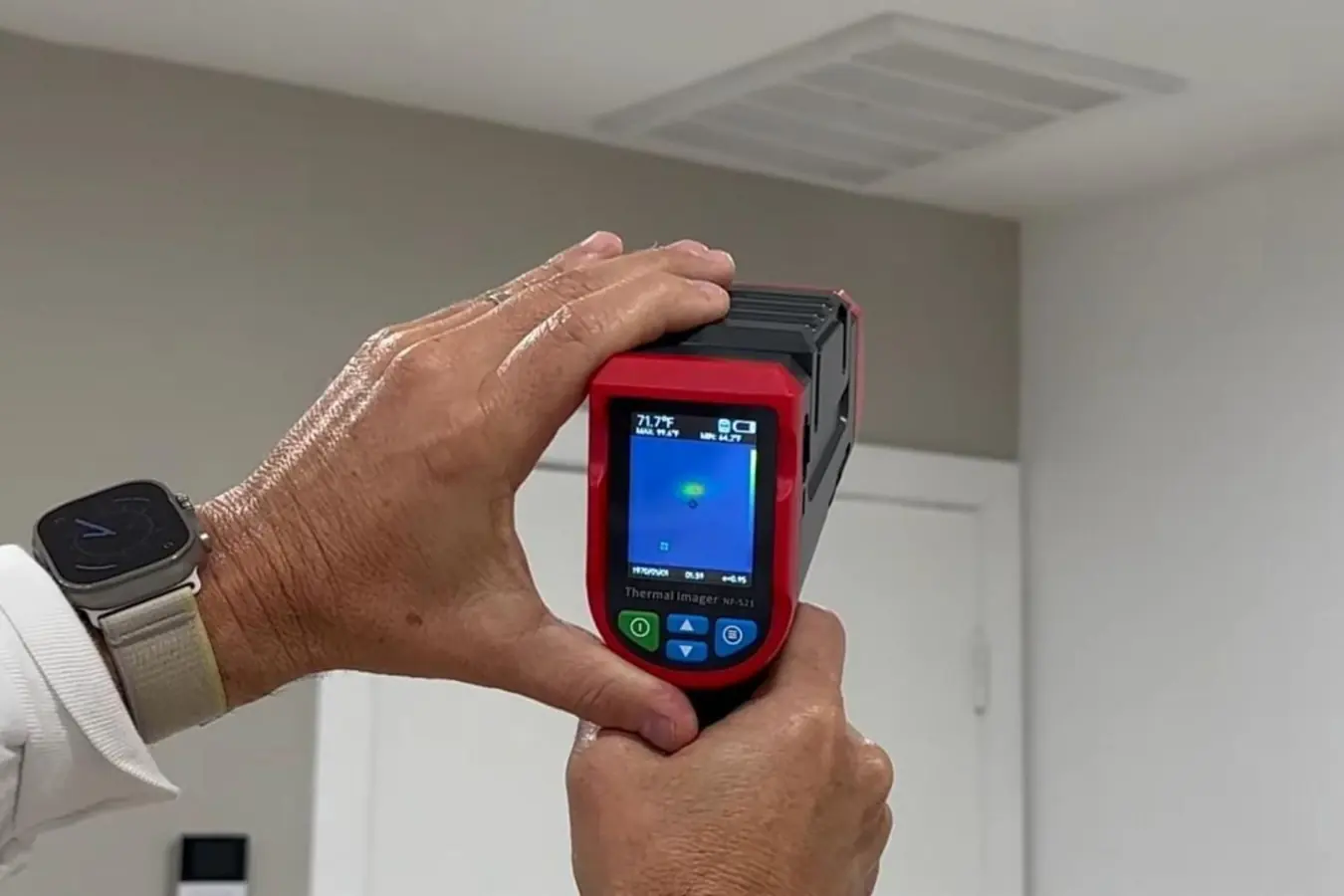
Leak detection in Hamden, CT begins with a symptom, not a tool. A water bill that jumped, a meter that keeps turning when every fixture is off, a stain spreading across a ceiling, a damp patch on a basement floor or the sound of running water inside a wall are all reasons to call. Most people do not know where the water is going, only that it is.
If water is actively coming through a ceiling or you cannot stop a flow, treat it as an emergency leak detection call. We answer 24/7 and dispatch around the clock, and we guide you through the shutoffs while a plumber heads your way.
Water through a ceiling or a leak you cannot trace
A leak coming through finished space or one you cannot isolate needs fast action. Call at any hour. We take after-hours and weekend leak calls, and we try to book the earliest same-day visit.
Do this first.
- Shut off the main water valve where the line enters the house. Turn it fully closed and note where it is for future use.
- Turn off power to rooms below a leaking ceiling if the ceiling is dripping near fixtures or outlets.
- Place buckets under drips. If a ceiling is bulging with water, keep clear of it and tell us when you call, since it can release a lot of water at once.
- Photograph the damage and take a meter reading, since both help with a claim and with locating the leak.
Symptom to suspect to confirmation
Starting with what you notice narrows the search. This is how we think about it.
| What you notice | Likely source | How we confirm |
|---|---|---|
| Meter turns with everything off | Service line, hidden supply leak or running toilet | Isolate the system, pressure test each section |
| Water bill much higher than usual | Slow leak, toilet flapper, irrigation or outdoor line | Meter test, fixture checks |
| Stain or sag on a ceiling | Supply or drain above, or a roof leak | Moisture meter, thermal imaging, test above |
| Wet or warm floor, or a damp slab area | Slab, in-floor or buried line | Acoustic listening, thermal scan |
| Hissing or running water sound | Pressurized supply leak | Acoustic sensors on pipe and wall |
| Soft, green or wet spot in the yard | Underground water line or irrigation | Line locator, pressure test |
The meter test you can do yourself
Before we arrive, you can learn a lot from your water meter. Turn off every fixture and appliance that uses water, then look at the meter's small leak indicator or low-flow dial. If it moves, water is going somewhere. Take a reading, wait an hour with everything still off, and read it again.
A moving meter with no fixture running points to a leak between the meter and the fixtures, which is often the service line or a hidden supply pipe. A still meter with a high bill points elsewhere, such as a toilet that runs intermittently, an irrigation system or seasonal use. We take it from there with a proper pressure test.
The tools we use and why
Finding a leak without opening everything takes several methods. Acoustic listening devices pick up the sound of water escaping a pipe, even through floors and soil. Thermal imaging shows temperature differences from hot water lines and wet materials. Moisture meters show dampness in drywall, wood and masonry. Pressure testing isolates sections of piping so we can say which section is losing pressure.
Line locators trace buried pipe so we mark the route, and for stubborn cases a tracer gas introduced into an isolated pipe can show where it escapes. We pick the method for the symptom, not the other way around, and we explain the result in plain terms.
Ceiling, wall and attic leaks
A ceiling stain is rarely directly below the leak. Water travels along framing and pipes before it shows up, and the source can be a supply line, a drain, a tub overflow, a roof problem or a window. We trace upstream until the moisture trail ends.
If the leak comes from a bathroom above, a failed shower valve or tub drain is often the cause, which is where our faucet and valve repair work comes in. If it comes from the roof, we tell you and you call a roofer.
Basement, crawlspace and slab leaks
Many Hamden homes have basements, and a damp basement floor is not always a pipe leak. Groundwater, a failed sump pump or surface drainage can all put water on a basement floor. We check the plumbing first and tell you when the evidence points to groundwater instead, which leads to sump pump and basement waterproofing conversations.
On slab-on-grade sections and under additions, a leak under the concrete shows up as a warm spot, a wet area or a meter that will not stop. Slab leaks are repaired by rerouting the line, spot-repairing it under the slab, or replacing the section. We discuss the options once the leak is located.
Underground and yard leaks
The water service line that runs from the street to your house is buried, and a leak there can go unnoticed for a long time. Signs include a soft spot in the lawn, a green stripe over the line, low water pressure and a moving meter. If we find one, our water line repair page explains how the line is repaired or replaced.
Irrigation lines are a common source of high summer bills, and a pool or spa line can leak too. We locate those leaks, but we may refer you to an irrigation or pool specialist for the repair.
Hamden's seasons and your pipes
Connecticut winters can freeze exposed pipes in unheated areas, and a split from a freeze often goes unnoticed until the thaw. If a leak appeared after a cold snap, mention that when you call. Pipes along exterior walls, in crawlspaces and in unfinished sections of basements are the usual suspects.
Properties near low ground by the Mill River or Lake Whitney can also have groundwater issues, so we separate plumbing leaks from seepage before we recommend a fix.
What goes into a leak detection price
You get a clear price before work starts. These factors shape it.
Some homeowners policies cover the cost of finding a leak when it caused covered damage, and others do not. Ask your insurer before you book. Call (203) 720-6269 for a quote on your situation.
Standards behind a pressure test
Pressure testing is a recognized way to prove a section of supply pipe is sound, and the plumbing code expects new and altered piping to be tested. Connecticut's 2022 State Building Code is based on the 2021 International Plumbing Code (IPC). Finding a leak is not code work, but repairing it is, so ask the Hamden Permits and Licensing Center when a repair involves replacing piping.
Call us and describe what you see. We will start with a plan, not a guess.
Leak Detection questions in Hamden
Yes. Our dispatch line is open around the clock, and we book same-day leak detection whenever the schedule allows. We talk you through shutoffs on the phone.
A moving water meter with everything off, a bill much higher than usual, a stain that keeps growing, or the sound of running water are the main signs.
We try to locate the leak first with acoustic, thermal and moisture tools, so any opening is small and in the right place.
We locate it and then discuss options, which usually include spot repair under the slab or rerouting the line.
Yes, with locators and pressure testing. For the irrigation repair itself we may refer you to a specialist.
Yes. Tell us the number of units and who has access, and we will plan the visit around tenants. See commercial plumbing for larger buildings.