
Hidden leaks do not announce themselves. The usual signs are a bill that jumped for no reason, a musty smell in a closet, paint that bubbles on a wall or a meter that turns when nobody is home. By the time water shows on a ceiling, the leak has often been running for weeks.
This guide walks through the same order we use on a visit, so you can narrow the search before you call our leak detection team.
Step one: the meter test
Turn off every fixture, the dishwasher, the washing machine and the ice maker. Find the water meter and look for the small triangle or dial that moves when any water flows. If it spins, record the reading, wait an hour with everything still off and read it again.
A change means water is escaping somewhere between the meter and your fixtures. A still meter with a high bill points to something that runs part of the time, such as a toilet, a sprinkler or a pool fill.
Step two: check the usual suspects
Start with toilets because they are the most common source. Add dye to each tank and check the bowl after fifteen minutes. Then look under every sink, behind the washing machine and around the water heater for drips, rust stains and swollen cabinet floors.
Outdoors, check hose bibs for drips and look at the ground along the line between the meter and the house. A soft, green or unusually wet strip of lawn can mean a buried line leak.
Where hidden leaks tend to show up
Each place has its own tell.
| Location | Warning sign | Possible source |
|---|---|---|
| Ceiling below a bathroom | Brown stain or sag | Shower valve, tub drain or supply line |
| Basement wall or floor | Damp patch, white crust | Supply line, groundwater or condensation |
| Slab floor | Warm spot, damp carpet | Hot water line in or under the slab |
| Yard | Soft spot, green stripe | Service line or irrigation |
| Cabinet under a sink | Warped floor, musty smell | Supply connection or drain trap |
Step three: listen and feel
On a quiet night, walk through the house with the water off at every fixture and listen for hissing. A faint hiss in a wall or at the water heater often means pressurized water is escaping. Feel along baseboards and exterior walls for warmth that does not belong, which can mean a hot water leak.
Do not cut into walls to look. Opening the wrong wall costs more than the leak, and a moisture meter or an acoustic sensor finds the spot without demolition.
Step four: tell leaks from condensation and groundwater
Not every damp spot is a plumbing leak. Cold pipes in humid weather sweat, basements take on groundwater after heavy rain and roof leaks drip into ceilings from above. Tape a piece of plastic to a damp wall for a day. Moisture on the room side points to condensation, and moisture behind the plastic points to seepage.
If water appears only after rain, the cause is outside and our sump pump page may be more useful than a leak search. If it appears regardless of weather, it is probably plumbing.
What a professional adds
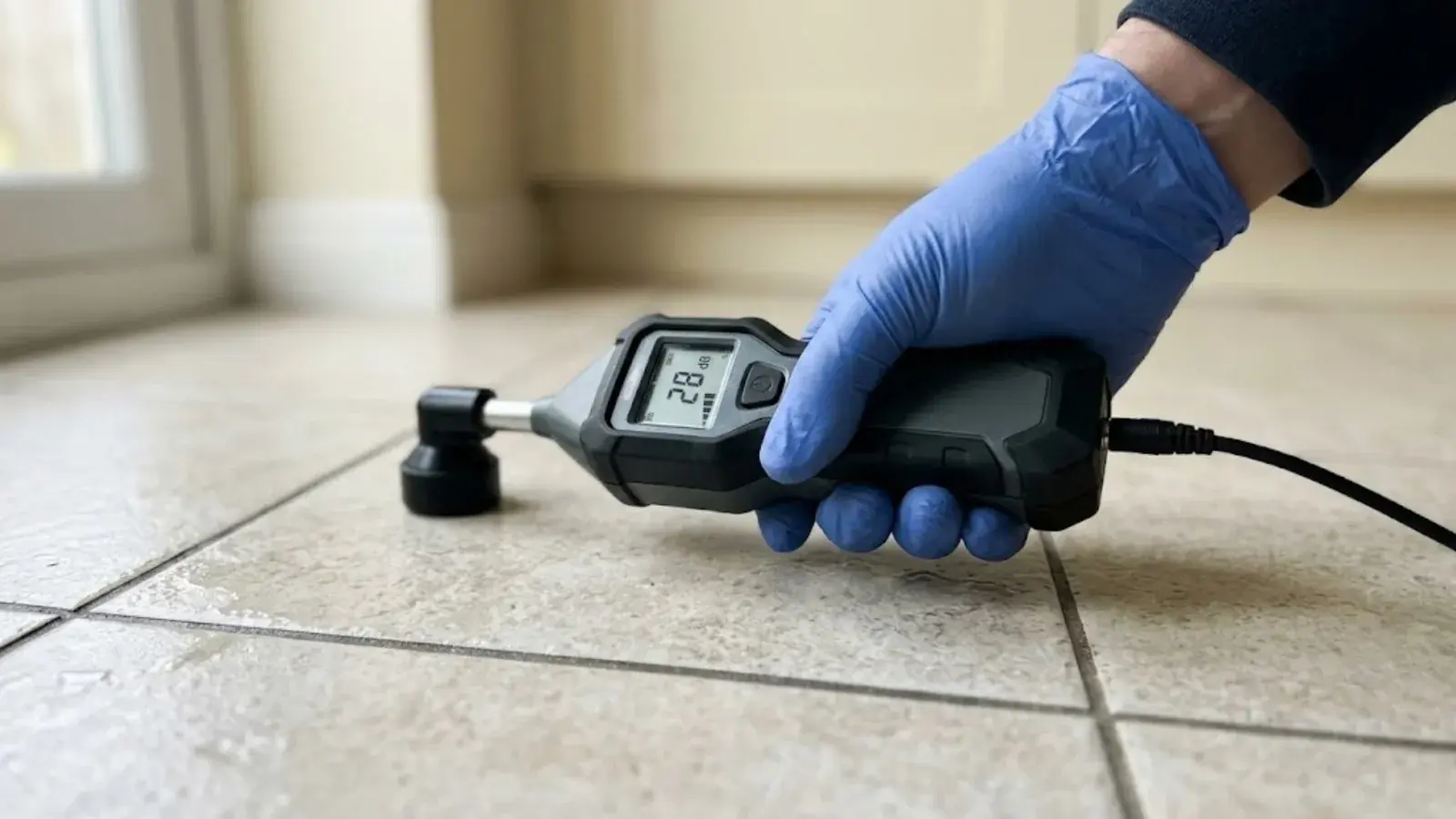
We use acoustic sensors that hear water escaping a pipe, thermal imaging that shows temperature differences, moisture meters that read dampness in drywall and wood and pressure tests that isolate sections of piping. The result is a location, not a guess.
Once the leak is found, you can decide on a spot repair, a section replacement or a bigger project such as water line repair when the leak is on the buried service line.
Reading a Hamden meter and bill
Hamden is in the service area of the South Central Connecticut Regional Water Authority, whose customer service line is 203-562-4020 on weekdays. The authority can tell you how your meter reports usage and what your bill covers.
If you have a leak on the buried line, the dividing point between the authority's responsibility and yours varies by street, so confirm it before you hire anyone to dig. Permit rules vary, so ask the Hamden Permits and Licensing Center about excavation. Pressure testing of supply piping follows the same logic the 2021 International Plumbing Code (IPC) uses for new work, and Connecticut's 2022 State Building Code is based on that model code.
When it is urgent
Water coming through a ceiling or flowing from a wall is an emergency. Close the main valve, turn off power to the affected room if you can do so safely and call us. We answer 24/7, and we serve Wallingford and Cheshire as well as Hamden.
Call us and tell us what the meter does.
Local questions answered
Turn off all water use, note the reading or watch the small leak indicator, wait an hour and read it again. Movement means a leak.
Some policies cover the cost of finding a leak that caused covered damage. Ask your insurer before you book.
Yes. Persistent moisture can start mold in a couple of days, so address a suspected leak promptly.
That is generally the water utility's side, but confirm with the Regional Water Authority at 203-562-4020.
We use sensors and thermal imaging first, so any opening is small and in the right place.