
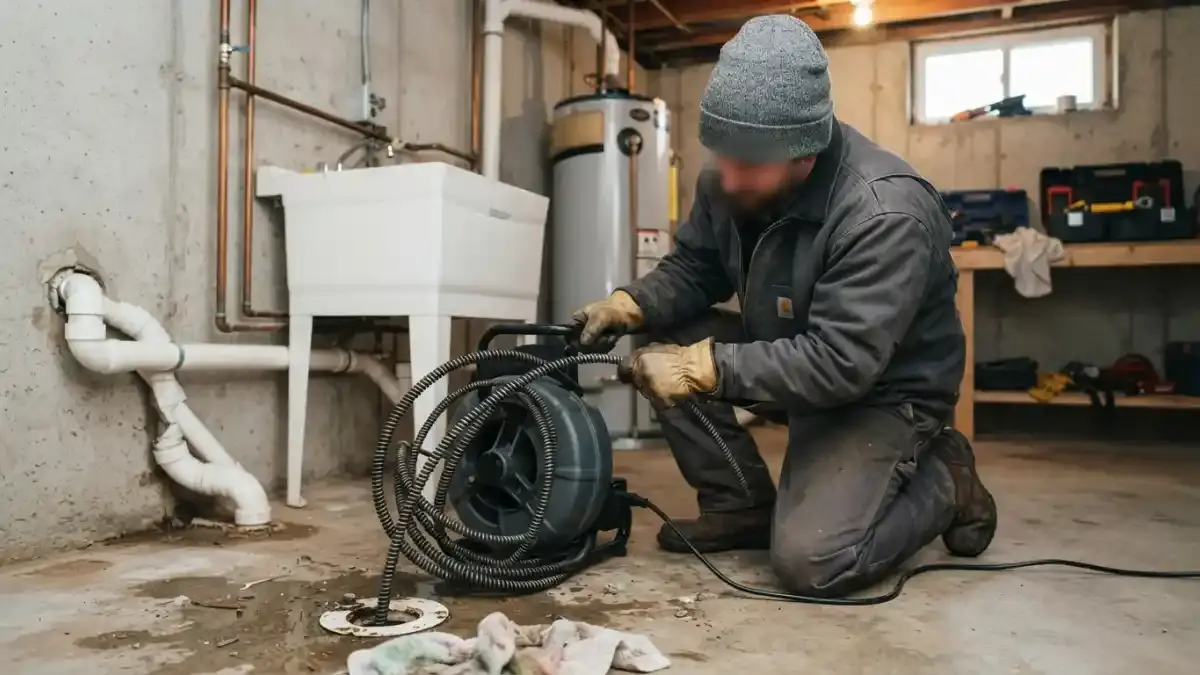
A clogged drain is rarely a surprise. The sink slows for a week, the tub drains with a gurgle and then one morning the water stops. Most clogs sit within a few feet of the fixture and can be cleared with simple tools, which makes it worth trying the easy steps first.
This guide shows how to clean a clogged drain safely, which products to avoid and when to call our drain cleaning team. If sewage is coming up or several fixtures are backing up together, skip ahead to the last section and call.
First, work out where the clog is
A clog at one fixture is a local problem. Water that will not leave the bathroom sink but runs fine everywhere else is stuck in that sink's trap or branch line. If the tub, the toilet and the sink all slow down together, the blockage is deeper, in the main drain.
Check which fixtures are affected, and try the lowest one in the house. A basement floor drain that bubbles when you run the upstairs washer points to the main line.
Clog type and the right first move
Matching the tool to the clog saves time and protects your pipes.
| Where | Usual cause | First move |
|---|---|---|
| Bathroom sink | Hair and soap in the trap or pop-up | Clean the stopper and the trap |
| Kitchen sink | Grease, food scraps | Plunge, then clear the trap, hot water afterward |
| Tub or shower | Hair near the drain | Remove the cover, pull the hair out, use a drain strip |
| Toilet | Paper or an object in the trap | Plunge with a flange plunger or use a closet auger |
| Several fixtures | Main line blockage | Stop using water and call |
The plunger and the trap
A cup plunger works on flat-bottomed sinks and tubs. Cover the overflow with a wet cloth so the pressure goes down the drain, fill the sink with enough water to cover the cup and plunge firmly for twenty seconds. For a toilet, use a flange plunger with the rubber extension.
If plunging fails, place a bucket under the trap, unscrew the slip nuts and clean the trap by hand. Most kitchen and bathroom clogs end here. Reassemble with the washers in place and test for leaks.
Hand augers and drain strips
A hand auger, also called a snake, reaches past the trap into the branch line. Feed the cable in, turn the handle and pull back to hook the blockage. A plastic drain strip, a barbed strip, pulls hair from a shower drain more safely than any chemical.
Do not force a snake. If the cable stops hard, you may have hit a bend, a cleanout or a break, and forcing it can damage the pipe.
What not to pour down the drain
Chemical drain openers can burn skin and eyes, damage old pipes and make a plumber's job harder when the clog does not clear. The drain is then full of caustic water. Boiling water can soften PVC joints and crack porcelain.
A safer routine is hot tap water after washing dishes, a drain strip for hair and a mesh stopper at every tub and shower. Never pour grease down the sink, and use the trash for wipes.
When it is time to stop
Stop and call if the clog returns within days, if the drain gurgles in other fixtures, if you smell sewage or if water backs up in the lowest drain. Those are signs the problem is beyond a trap. We use a drain machine, and when the buildup is heavy, hydro jetting cleans the pipe walls.
A camera inspection tells us whether the cause is grease, roots or a damaged pipe, and it shows you what is really in the line.
Hamden drains and the sewer network
Most of Hamden is served by the Greater New Haven Water Pollution Control Authority, which also serves New Haven, East Haven and Woodbridge. It lists an emergency line of 203-466-5260 for public sewer problems, while the pipe on your own property is generally yours to repair.
Local reporting in 2018 described northern Hamden along Whitney Avenue as largely on septic. If you are on septic, avoid chemical openers and bleach, which can upset the tank, and call a septic specialist if the whole system backs up. Traps, vents and cleanouts are regulated by Connecticut's 2022 State Building Code, which is based on the 2021 International Plumbing Code (IPC), so never remove a trap seal or cap a vent to clear a clog.
When it is an emergency
Water rising in a tub or shower during a heavy rain, or sewage coming up through a floor drain, is an emergency. Stop using water, keep people away from the area and call. We answer 24/7, and we serve New Haven and North Haven as well as Hamden.
Call us and tell us which fixtures are slow.
Local questions answered
It can freshen a drain and loosen light buildup, but it will not clear a real blockage.
We recommend against it. Chemicals can damage pipes and are dangerous if a plumber must open the trap afterward.
A partial blockage, grease buildup, roots or a damaged line is likely. A camera inspection shows which.
If several fixtures drain slowly or a floor drain bubbles when you run water elsewhere, the main line is the likely cause.
Yes. We answer 24/7, and a blocked main line is a same-day priority.