
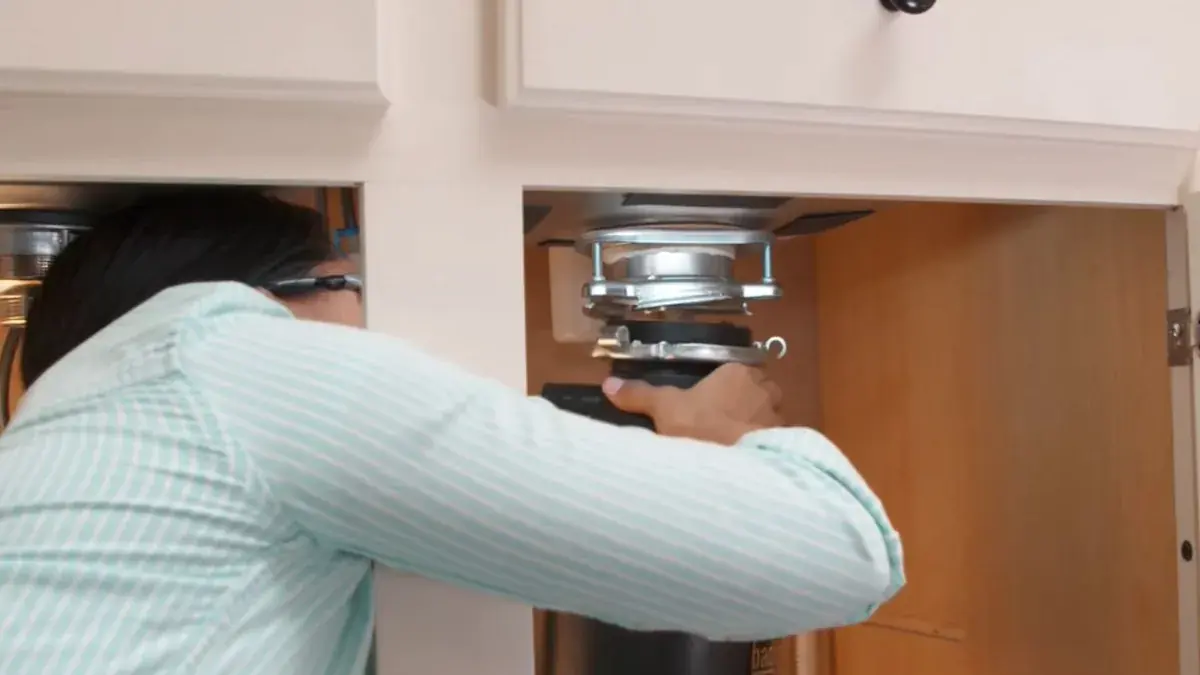
A new garbage disposal is a small project with a few details that decide whether it works for years or leaks in a month. The unit, the sink flange, the electrical connection and the drain all have to be right.
This guide explains how to choose a disposal and what a proper installation includes. If your current unit is failing, our garbage disposal repair page explains when repair makes sense.
Check the sink and the drain first
Before you choose a unit, look under the sink. Most disposals work with a standard three-and-a-half inch sink opening, but some sinks, such as thin stainless steel or certain composite sinks, need special mounting. The drain trap and the line behind it have to be in good condition, because a disposal sends more solids down the pipe.
A slow kitchen drain is a reason to clear the line before installing anything. A new disposal on a blocked drain just moves the problem.
Choosing a disposal
Match the unit to your kitchen and your habits.
| Feature | What it does | Choose it if |
|---|---|---|
| Horsepower | Grinding power | Larger households or tough scraps |
| Continuous feed | Runs while the switch is on | Most kitchens |
| Batch feed | Runs only with the stopper in place | You want extra safety around children |
| Mount type | How the unit hangs | Match your sink, a quick-lock mount makes later changes easy |
| Insulation | Reduces noise | An open kitchen or a nearby living area |
Electrical connection
A disposal needs power, usually from a switched outlet under the sink or a hard-wired connection. The wiring has to meet code, and a switch should sit within reach of the sink. If your kitchen has no switched outlet, an electrician may need to add one.
We handle the plumbing side and recommend a licensed electrician for new wiring. You can verify any Connecticut contractor's license in the Department of Consumer Protection's eLicense portal.
Dishwasher connection
The dishwasher drain hose often connects to the disposal inlet. A new disposal has a knockout plug that must be removed for the connection to work, and a forgotten plug is a common cause of dishwashers that will not drain. A properly looped drain hose also prevents backflow.
We check the dishwasher drain every time we install.
Using it well
Run cold water before, during and for a few seconds after grinding. Feed scraps in small amounts. Keep grease, fibrous scraps, coffee grounds in quantity, pasta and rice out of the unit. Bones and fruit pits can jam it.
If a disposal stops, switch it off and use the hex socket under the unit to free the flywheel. Press the reset button. Never reach in by hand.
Septic homes and disposals
A disposal adds solids to a septic tank, which can raise pumping frequency. If your home is on septic, ask a septic specialist before installing one. Some septic systems tolerate a disposal, and others do not.
Public sewer homes face fewer constraints, but grease still builds up in the drain line, so good habits matter.
What a proper installation includes
A complete installation removes the old unit, cleans the sink opening, installs the new flange with fresh plumber's putty, hangs the disposal and connects the drain and the dishwasher hose. The plumber tests for leaks with water running and checks the grinding action with a few scraps.
Ask whether the price includes haul-away of the old unit, a new discharge tube and any electrical cord or connector. These small items are where quotes differ. We list them before work begins so the number you hear is the number you pay.
Noise, size and cabinet space
Under-sink space is often tight, with a trap, a dishwasher hose and cleaning supplies competing for room. Measure the depth from the sink flange to the bottom of the cabinet before you buy. A taller unit may not fit once the drain tube is attached.
Noise varies by model and insulation. A disposal in a kitchen open to a living room is worth a quieter, better insulated unit. A smaller, simpler model may suit a galley kitchen where noise matters less.
Hamden sewers and septic
The Greater New Haven Water Pollution Control Authority provides sewer service in Hamden, and local reporting in 2018 described parts of northern Hamden along Whitney Avenue as largely on septic. Confirm which you have before you buy a disposal.
Plumbing work in Connecticut falls under the 2022 State Building Code, based on the 2021 International Plumbing Code (IPC). Permit rules vary, so ask the Hamden Permits and Licensing Center whether a disposal installation needs a permit.
Doing it yourself or hiring a plumber
A disposal swap is within reach for a handy homeowner if the mounting and wiring are already in place. A first-time install, a new circuit or a drain that needs reworking is a job for a professional. We serve North Haven and Woodbridge as well as Hamden, and we can schedule a visit during the day.
Call us and tell us about your sink.
Local questions answered
Many households do well with a half to three quarter horsepower unit. Larger families may want more.
Ask a septic specialist first, since a disposal adds solids to the tank.
Most standard sinks work. Thin or composite sinks may need special mounting.
If there is already a switched outlet under the sink, often not. A new circuit needs a licensed electrician.
A straightforward replacement is often done in an hour or two.