
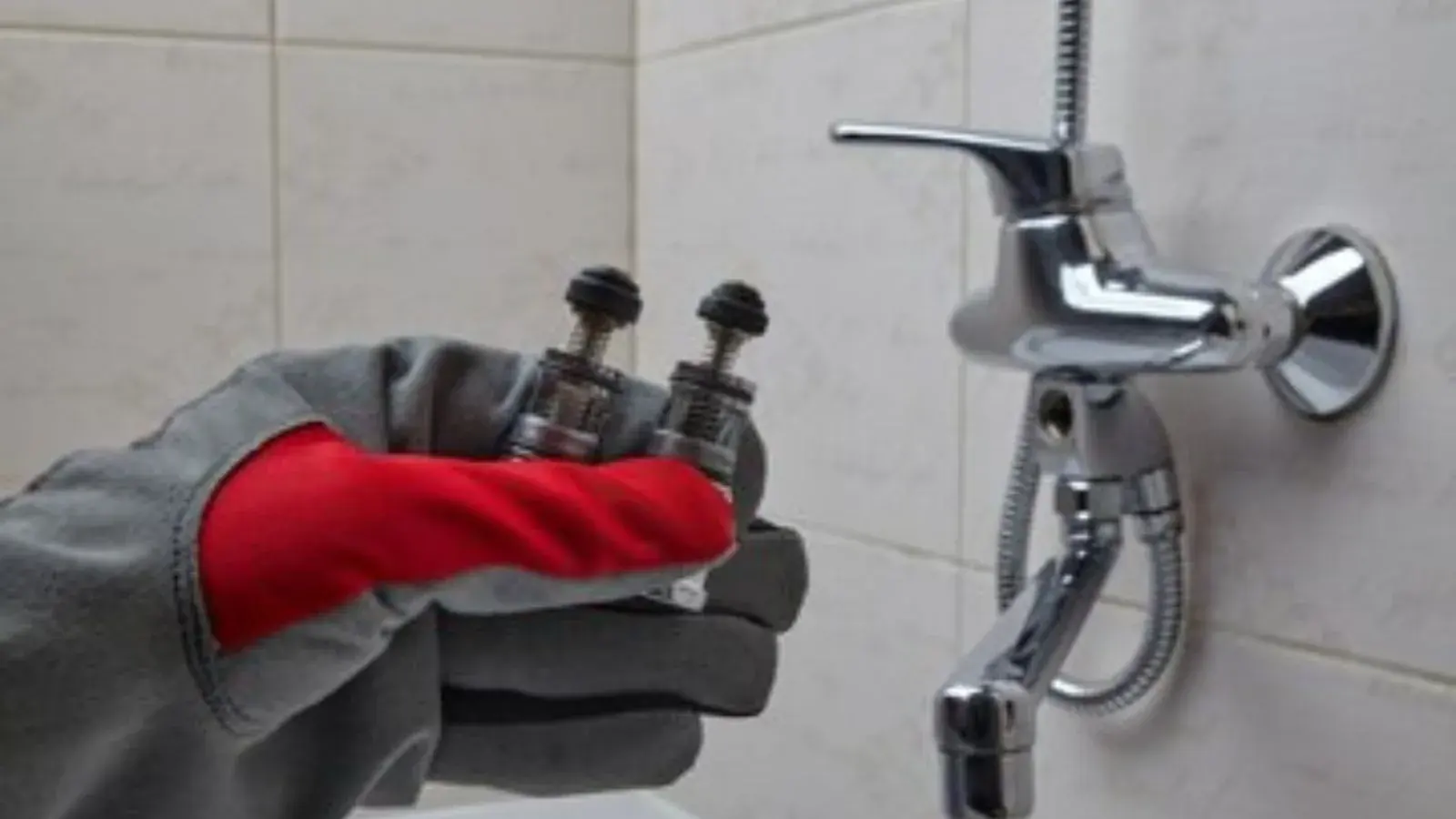
A shower looks simple from the outside, a head on the wall and a handle. Behind the tile are two supply pipes, a valve that mixes them, a pipe that carries water up to the head and a drain below. Each part has its own failure pattern, and knowing them helps if you are fixing a drip or planning a full remodel.
This guide covers what is in the wall, what typically fails and how to talk to a plumber about a shower project. For repairs, see our faucet and valve repair page.
The parts behind the wall
Hot and cold supply lines run to the shower valve, usually three quarter inch or half inch pipe in copper, PEX or older galvanized steel. The valve body mixes the water, and a cartridge inside controls temperature and flow. A short pipe runs from the valve up to the shower arm, and the arm ends at the head.
At the bottom, the shower pan or tub drains through a trap into the waste line. A vent pipe lets air in so the drain runs smoothly. If any of these is wrong, you will hear gurgling or see slow draining.
Shower parts and the problems they cause
Match the symptom to the likely part.
| Part | Typical problem | What you notice |
|---|---|---|
| Cartridge | Wear or mineral buildup | Drip from the head, hard to turn, temperature swings |
| Valve body | Corrosion or a cracked casing | Leak behind the wall, stain on the ceiling below |
| Supply pipe | Pinhole or joint leak | Damp drywall, moisture on the other side of the wall |
| Shower arm | Loose thread | Water on the wall around the arm |
| Drain and trap | Hair and soap buildup | Standing water, slow draining |
| Vent | Blocked or missing | Gurgling, slow drain across fixtures |
Why shower leaks hide for so long
A leak in a shower wall often shows up somewhere else. The water follows the pipe or the framing and appears as a stain in the ceiling below, a soft spot on a floor or a musty smell in a closet. By then the damage has been growing for weeks.
If you see any of those signs, close the water to the bathroom and call. Our leak detection approach finds the source with moisture and thermal tools instead of tearing the wall open.
Cartridge replacement versus a new valve
Many single-handle showers use a cartridge you can replace from the front, which means no demolition. A good plumber matches the brand and model, replaces the O-rings and tests the temperature range.
If the valve body itself leaks or is no longer made, the repair requires access from behind or through the wall. That is a bigger job, and it is the best moment to upgrade to a pressure-balancing or thermostatic valve.
Planning a shower remodel
A remodel is the cheapest time to fix the plumbing. With the wall open, you can replace old galvanized or corroded supply pipes, move the valve to a better height and install a new drain. We also check that the drain slope and the vent meet code.
Bring the plumber in before the tile, not after. A shower valve set at the wrong depth is a common mistake, and fixing it means tearing out finished tile.
Pipe materials: what you might find
Older Hamden homes may have galvanized steel supply lines that narrow with corrosion, which shows up as weak shower pressure. Copper is common in mid-century homes, and PEX is common in newer work and in repiped homes. A mix of all three in one house is normal.
If low pressure at the shower is a long-term problem, our repiping page explains when replacing the supply lines makes sense.
Code and who to call in Hamden
Connecticut's 2022 State Building Code is based on the 2021 International Plumbing Code (IPC), which sets rules for fixtures, traps, vents and valves. Permit rules vary, so ask the Hamden Permits and Licensing Center whether your remodel needs a permit.
To verify a plumber's license, search the state eLicense portal run by the Department of Consumer Protection. The Regional Water Authority at 203-562-4020 can answer questions about your water supply pressure on the street.
When to call us
Call if water stains appear below a bathroom, if the shower will not shut off or if the handle spins freely. A shower that will not stop is an emergency, and we answer 24/7.
We serve New Haven and Wallingford as well as Hamden, and we can plan a remodel visit during the day.
Call us and tell us what you see.
Local questions answered
Many showers use half inch or three quarter inch supply pipe, depending on the home and the fixture.
A cartridge can often be replaced from the front. A leaking valve body usually needs access from behind.
A worn cartridge or a sudden pressure change when another fixture runs is the usual cause.
Permit rules vary, so ask the Hamden Permits and Licensing Center.
If the pipes are galvanized or leaking, yes. It is much easier with the wall open.